What is Osteopathy
In a nutshell
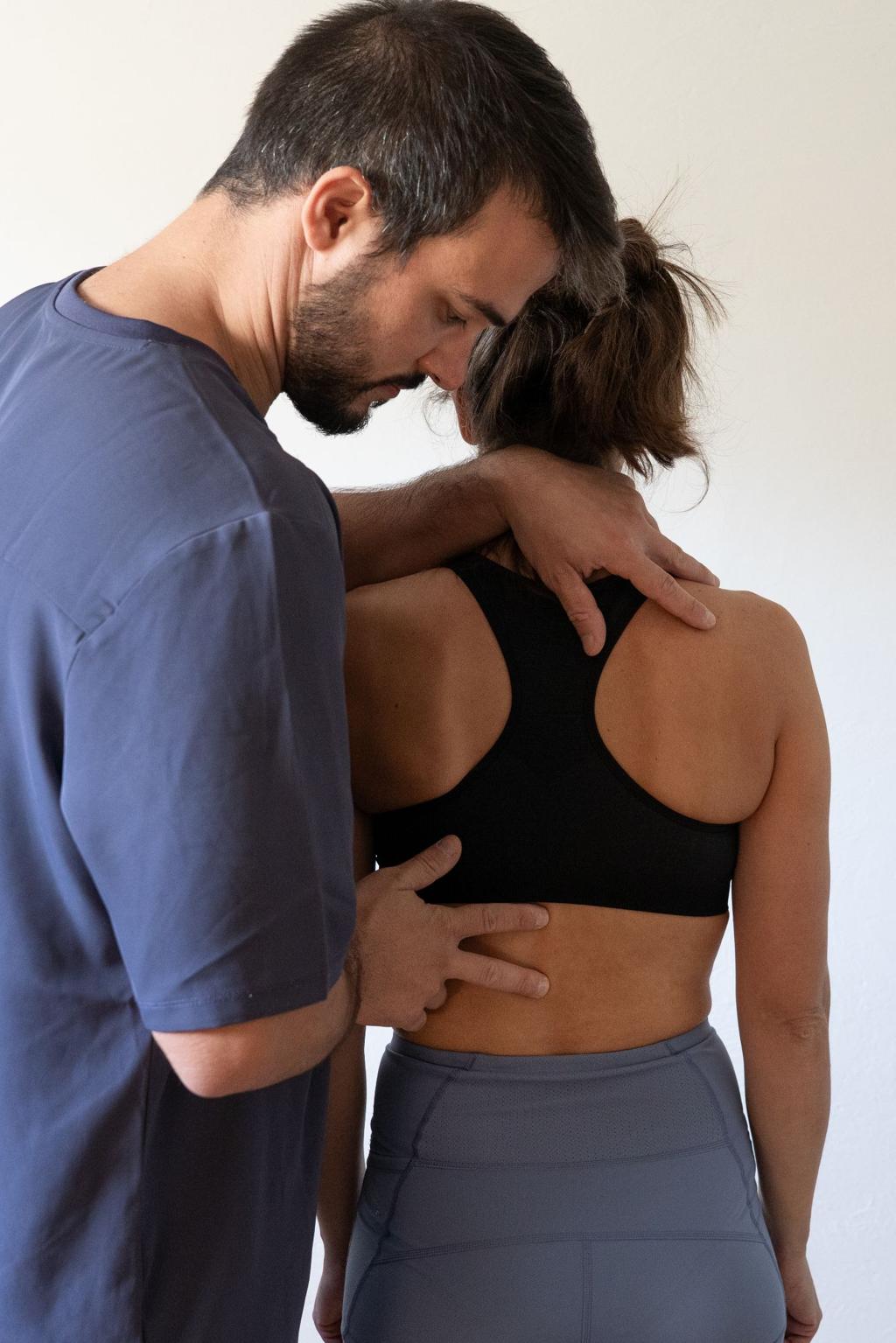
Osteopathy is a hands-on approach to health. The osteopath uses their hands to assess and treat areas of the body that have lost mobility, with the goal of supporting the person's overall wellbeing.
It doesn't use drugs or invasive tools: it works with manual techniques, gentle or more direct depending on the person and the problem.
The principles behind it
Osteopathy is built on a few simple ideas:
- The body is a unit. Bones, muscles, fascia, organs and the nervous system are all connected. A problem in one area can originate somewhere else.
- Structure and function affect each other. If a part moves poorly, how it works is affected too, and vice versa.
- The body has the capacity to adapt. Osteopathic treatment aims to support that capacity, restoring mobility where it's been lost.
That's why an osteopath doesn't just look at the spot that hurts, but at the person as a whole.
Who it's for
Osteopathy is suited to people of all ages, from newborns to the elderly. People come to see an osteopath mainly for:
- back pain, lower back and neck pain
- joint stiffness and muscle pain
- tension linked to posture, sedentary work or sport
- tension-type headaches
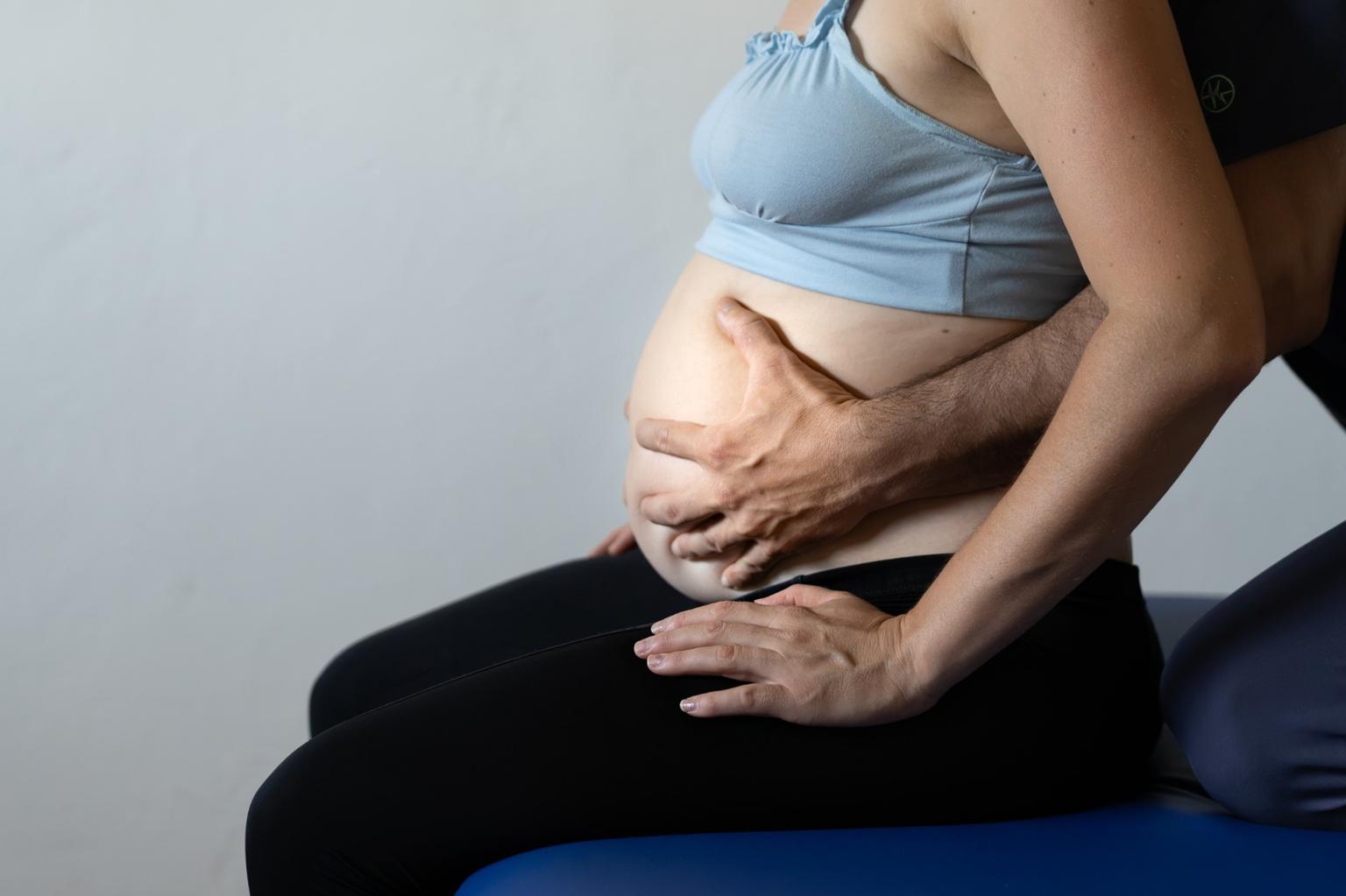
- discomfort during pregnancy and after birth, such as back pain
- discomfort in newborns and children, for example linked to posture
Osteopathy is also useful as prevention, to keep the body balanced during periods of greater physical load or stress.
How a session works
- Consultation. We talk about the reason for your visit, your medical history and your habits. If you have test results or reports, bring them along.
- Assessment. I observe your posture and use my hands to assess the mobility of different areas of the body, looking for tension and restrictions.
- Treatment. I choose the techniques best suited to you: structural, craniosacral, visceral or fascial. I always explain what I'm doing.
- Advice. At the end of the session I give you practical guidance and we decide together if and when to meet again.
I recommend wearing comfortable clothing. The session shouldn't be painful: if anything makes you uncomfortable, tell me at any time.
What I actually do with my hands
Before treating, the hands listen. Palpation is an osteopath's first tool: I rest my hands on the tissues and feel how they move, where they glide freely and where I meet resistance. That's why every session starts with the assessment and not with the technique: I decide whether and how to intervene only after feeling what's under my fingers.
Osteopathy isn't a single technique. I use four of them, different in the way they work and in how intense they are.
- Structural. The most direct one: I work on joints and muscles with mobilisations, stretches and manipulations, to give movement back where it has been reduced. Sometimes you hear a small click: that's a normal thing, to do with the fluid inside the joint, not a bone going back into place.
- Craniosacral. "Craniosacral" means the contact is between the skull and the sacrum, the bone at the base of the spine. It's very light work, pressures of a few grams, on the membranes and the fluids that surround the nervous system. Quite a few people doze off while I do it.
- Visceral. Here my hands work on the abdomen and the chest: liver, intestine, diaphragm and the attachments that hold the organs to the rest of the body. An organ that glides poorly pulls on the tissues around it, and the other way round works just the same.
- Fascial. Fascia is the film of tissue that wraps muscles, bones and organs and connects them to one another, from the sole of the foot to the back of the neck. With slow, sustained holds I follow its tension, and I often start from an area far from the one that bothers you.
In the same session I often use more than one: the choice comes from what emerges during the assessment, not from a fixed protocol. And if a technique doesn't make you feel comfortable, tell me, and we work another way.
Osteopathy and medicine
In Italy, osteopaths are recognised as healthcare professionals under Law 3 of 2018. Osteopathy doesn't replace your doctor, but can work alongside them.
That's why, when needed, I encourage you to consult your doctor before or during your treatment. Working together with other healthcare professionals is the best way to take care of you.
Have questions?
If you want to find out whether osteopathy could help you, get in touch. I'm happy to answer.
Contacts
- Phone and WhatsApp: +39 379 347 9623
- Email: do.liguori@outlook.it
- Practice: Via Santa Barbara 8, 33087 Pasiano di Pordenone (PN), Italy
- VAT number: 01998780934
What patients say
Professionista serio e scrupoloso, sono andato per un problema al muscolo piriforme, dopo un check accurato e un massaggio per decontrarlo ha agito su tutto lo scheletro per sbloccare la causa della contrattura che veniva dal blocco dell'anca. Beneficio immediato e sollievo.....Bravo👏 …Mi son trovata benissimo e a mio agio. Mi ha spiegata bene la situazione e si è preso il tempo necessario per capire come agire al meglio. Tornerò!Prima visita con lui ma in generale con un osteopata. Per me esperienza super positiva! Persona molto professionale e attenta alle tue esigenze/problematiche. Sicuro sarà un inizio di una buona collaborazione duratura